

If you’re exploring infrared heat therapy, understanding the specific wavelengths from an infrared heat lamp is crucial for maximizing benefits and selecting the right device. Infrared heat lamps emit a range of light that penetrates tissue and stimulates biological responses, but not all wavelengths deliver the same therapeutic power. This article breaks down how these infrared wavelengths work, their clinical effectiveness, and how infrared heat lamps compare to advanced LED light therapy devices, helping you make an informed choice for muscle recovery, pain relief, and wellness.
What Are Wavelengths from an Infrared Heat Lamp?
Wavelengths refer to the distance between peaks of light waves and determine how light interacts with the body. In light therapy, the wavelength range is key to targeting specific tissues and cellular processes. Infrared heat lamps typically emit broad-spectrum infrared radiation, usually spanning from about 700 nm to 1500 nm. These lamps peak near 1100 nm, delivering predominantly near-infrared wavelengths that penetrate deeply into the skin and underlying muscles. Knowing these infrared wavelengths matters because only certain wavelengths effectively stimulate cellular repair, blood flow, and pain reduction, making them essential for clinical light therapy success.
How Infrared Heat Therapy Works: Scientific and Medical Perspectives
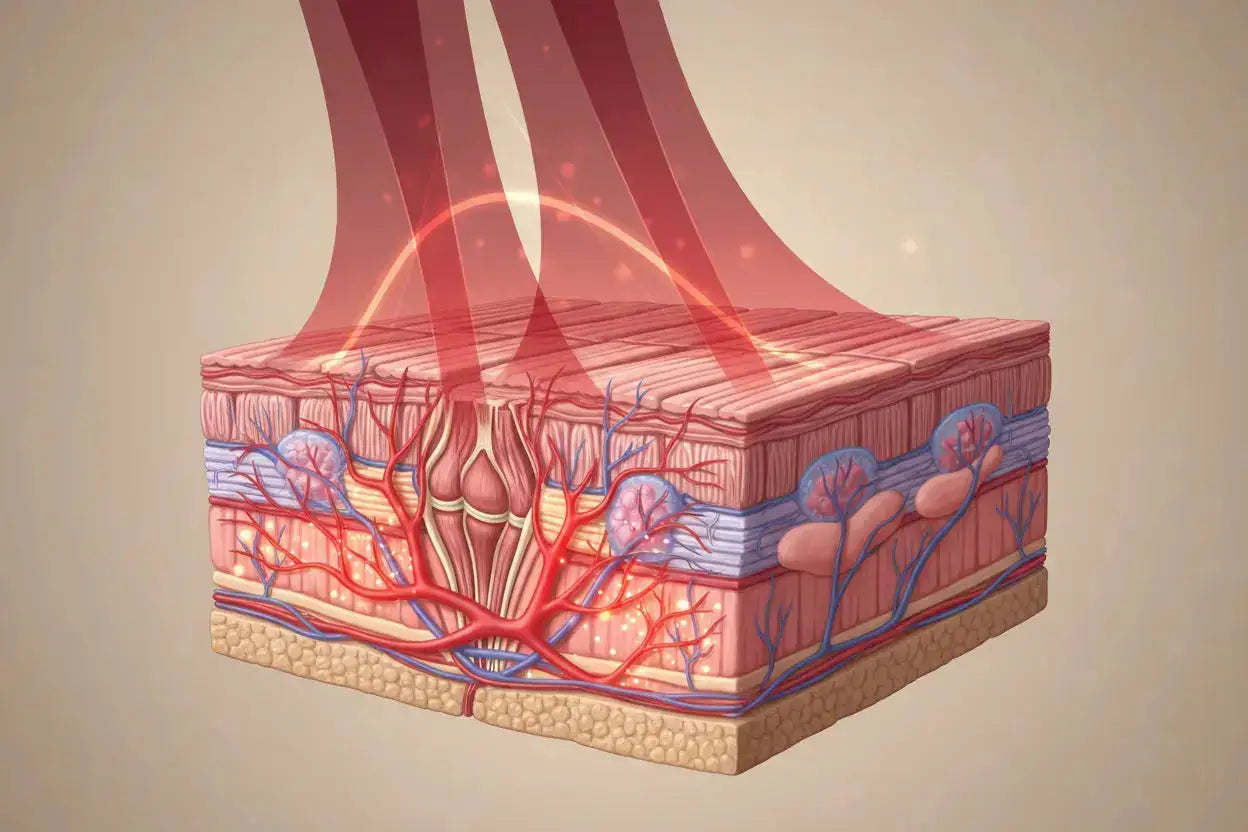
Infrared wavelengths influence the body by penetrating skin layers and reaching muscle and connective tissue, where they generate intense heat and stimulate biological functions. The heat causes vasodilation, increasing blood flow and improving nutrient delivery. Beyond heat stress, near-infrared light specifically affects mitochondria in cells by enhancing ATP production, which supports cellular repair and reduces inflammation. Scientific studies show that infrared heat therapy can improve muscle recovery and ease pain by this dual effect of heat penetration and light-specific cellular stimulation, making infrared heat lamps valuable for athletes and wellness users. For enhanced recovery, many also use devices like the Kasue massage gun for deep tissue relief that complements these therapies.
Clinical Benefits of Wavelengths Delivered by Infrared Heat Lamps
Within the infrared heat lamp’s broad spectrum, only a small fraction of wavelengths—mainly 600-660 nm and 810-880 nm—show significant clinical benefits. These ranges correspond to red and near-infrared light known for effective photobiomodulation. While infrared heat lamps deliver heat that provides symptom relief, their limited output of these effective infrared wavelengths reduces their ability to trigger deep cellular changes seen in clinical trials. True therapeutic effects depend on these specific wavelengths rather than heat alone, clarifying why heat lamps help with comfort but are less potent than targeted light therapy devices.
Comparing Infrared Heat Lamps and LED Light Therapy Devices on Wavelengths and Power
Infrared heat lamps emit a broad, less-specific wavelength curve, while LED light therapy devices deliver narrow, precise wavelengths within the therapeutic window. High-quality LED devices offer medical-grade power output, ensuring consistent and potent light doses. This specificity and controlled power output impact treatment times and clinical results—LED devices can achieve therapeutic effects faster and with less heat exposure. Infrared heat lamps cover a wider but less targeted spectrum, with lower clinical light therapy power, requiring longer sessions to approximate LED efficacy.
| Feature | Infrared Heat Lamp | LED Light Therapy Device |
|---|---|---|
| Wavelength Specificity | Broad spectrum, peak ~1100 nm | Narrow, targeted (600-660 nm & 810-880 nm) |
| Power Output | Lower, heat-dominant power output | Medical-grade, controlled power |
| Therapeutic Window Coverage | Partial, with limited effective wavelengths | Full coverage within therapeutic window |
| Treatment Time | Longer due to heat dissipation | Shorter, efficient sessions |
Understanding the Therapeutic Window and Effective Wavelength Ranges
The therapeutic window in photomedicine refers to a specific wavelength range that produces the greatest biological effects without causing damage. Wavelengths from about 600-660 nm (red wavelengths) and 810-880 nm (near-infrared) are known to produce the greatest health benefits, stimulating mitochondria and reducing inflammation effectively. Wavelengths outside this window typically have limited effectiveness, either penetrating too shallowly or too deeply without targeted impact. Devices that deliver light strictly within this wavelength range outperform infrared heat lamps, which emit a broad range that includes less beneficial wavelengths.
Benefits of Heat Lamp Therapy: What Users Should Know
Heat lamp therapy uses infrared and heat energy to relax muscles, increase circulation, and alleviate pain. It provides comfort by warming tissues and easing stiffness, often used for muscle recovery and minor aches. However, the infrared heat effect is distinct from the photobiomodulation produced by specific light wavelengths. While heat lamp therapy can reduce discomfort quickly, it may not offer the deeper cellular repair benefits of targeted red or near-infrared light therapy devices. For those seeking full-body wellness and relaxation, pairing heat lamp therapy with the KASUE Sauna Box or the 2 Person Sauna Box can enhance muscle recovery and overall comfort.
Limitations and Risks of Infrared Heat Lamps Compared to Red and Near-Infrared LED Devices
Infrared heat lamps carry risks of skin burns due to excessive heat exposure, especially without precise temperature control. Their limited output of effective infrared wavelengths reduces clinical impact, requiring longer treatment times that may be uncomfortable. Additionally, many heat lamps lack medical-grade power output and have not undergone rigorous clinical trials for light therapy effectiveness, limiting their acceptance in medical settings. These factors restrict their reliability compared to advanced red and near-infrared LED devices.
Choosing the Right Light Therapy Device: Heat Lamps vs High-Quality LED Options
When selecting a device, consider infrared wavelength range, power output, and clinical backing. Devices delivering targeted wavelengths within the therapeutic window at medical-grade power provide faster, safer, and more effective results. Look for products tested in clinical trials to ensure reliability. High-quality LED light therapy devices typically excel over infrared heat lamps for muscle recovery, detoxification, and overall wellness. Evaluate your recovery goals and choose accordingly to maximize benefits.
What is the wavelength of an infrared heat lamp?
The wavelength of an infrared heat lamp generally ranges from 700 nm to 1500 nm, with a peak around 1100 nm. This range primarily emits near-infrared wavelengths that deliver deep tissue penetration and heat.
What are the downsides of infrared heating?
Downsides of infrared heating include the risk of skin burns from intense heat without proper control, less targeted wavelength output reducing clinical effectiveness, and generally longer treatment times compared to precise LED light therapy devices.
What is the best wavelength for infrared light therapy?
The best wavelengths for infrared light therapy are within the therapeutic window, specifically red wavelengths (600-660 nm) and near-infrared wavelengths (810-880 nm), which have been shown to provide optimal mitochondrial stimulation and anti-inflammatory benefits.



Leave a comment
This site is protected by hCaptcha and the hCaptcha Privacy Policy and Terms of Service apply.