

If you’re comparing a 2 Person Portable Sauna: What to Check Before You Buy, the biggest mistake is assuming all two-person models feel, heat, and fit the same. In practice, the right choice depends on how much room you really have, how the heater performs in your space, and whether the setup will fit your routine. Portability can be a huge advantage for home saunas, but only if the unit is easy to assemble, safe to run, and comfortable enough to use regularly.
What a 2 Person Portable Sauna Should Solve
A two-person portable sauna should solve one of two problems: give two people a comfortable shared session, or give one person extra space to stretch out without feeling boxed in. That distinction matters because the phrase “2 person” can be misleading. Some models are designed for close seating and short sessions, while others are better described as roomy solo setups with occasional shared use. Before you buy, think about how often you’ll use it alone, with a partner, or with guests, and whether you want a temporary wellness tool or a more regular part of your recovery routine.
Portability also changes expectations. A portable sauna is usually chosen for easier storage, simpler delivery, and less commitment than a built-in unit, but that convenience may come with trade-offs in heat intensity, durability, and interior space. This guide focuses on practical buying checks rather than ranking products. The goal is to help you compare models based on real-world fit, performance, safety, and overall value so you can choose something you’ll actually want to use week after week.
Check the Size, Footprint, and Seating Fit
Size is the first filter because a sauna that technically fits the label may still feel cramped in daily use. Start with both the internal dimensions and the external footprint. Internal size determines comfort, while external size determines where the unit can realistically live in your home. Don’t forget ceiling clearance, especially if the sauna includes a roof section, heater clearance, or raised frame. A model may look manageable online and still become awkward once you account for doorway width, hallway turns, stairs, or elevator limits during delivery.
The “2 person” label is especially important to interpret carefully. Taller users often need more depth for knee angle, legroom, and upright posture. If the bench sits too low or the door opening is tight, the experience can shift from relaxing to cramped very quickly. For couples, shoulder room and seating width matter just as much as overall square footage. If you plan to use the sauna solo most of the time, a slightly larger model can be worth it because extra space improves comfort, makes clothing or towel changes easier, and may help heat feel less concentrated around your body.
Before comparing models, measure the room itself and then measure the path into the room. Check the room width, doorway width, hallway corners, stair turns, and any elevator restrictions if relevant. Packaging size can matter as much as assembled size because the sauna has to arrive before it can be used. Also think about where you will place it once assembled. A corner that seems open in a photo may block vents, outlets, or access to other furniture in real life.
Finally, consider the actual use pattern. A couple who wants shared sessions several times a week will have different needs than a solo user who only occasionally invites someone to join. If you expect regular use, buying slightly larger than the bare minimum often improves satisfaction. More room can also help the sauna feel less cluttered and make it easier to relax, especially during longer sessions.
Compare Heater Type and Heat Performance
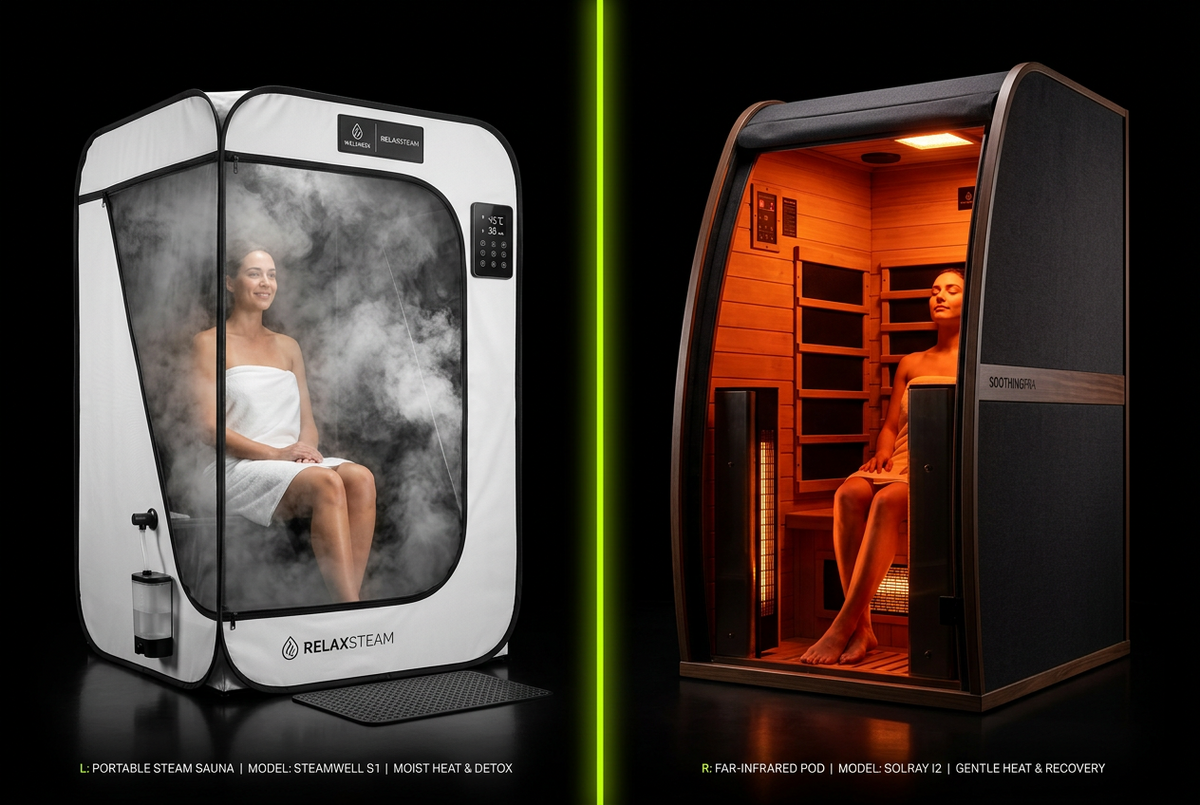
Heater performance is where marketing language often gets ahead of reality. The first question is whether you want infrared heat or a more traditional hot-room sauna experience. Infrared models use radiant heat that warms your body directly and usually feel gentler, which many home users prefer for shorter sessions or more frequent sauna use. Traditional sauna heat tends to create a hotter ambient environment, which some people love for the classic intense sweat experience, but it generally requires different expectations around space, power, and warm-up.
Neither approach is automatically better. Infrared can be a strong fit for buyers who want a manageable at-home routine, while traditional-style heat may appeal to people who prioritize high heat and a more immersive environment. If you’re comparing portable options, remember that the surrounding materials, insulation, and enclosure design can affect how heat feels just as much as the heater itself. A well-built portable sauna can retain warmth better and feel more consistent than a larger but poorly insulated one.
Look closely at the specs that actually matter: wattage, temperature range, warm-up time, and whether the unit offers stable control across a full session. Claims about “fast heat” or “deep sweat” mean little without supporting details. Heat consistency is especially important in a portable sauna because insulation losses can vary depending on room temperature, airflow, and how often the door opens. If one model needs constant adjustment while another holds a steadier temperature, the second may be the better long-term choice even if the headline features look less exciting.
Think about comfort too. Some users want a milder environment for longer sessions, while others want a more intense sweat in a shorter window. For home saunas, satisfaction usually comes from matching the heater behavior to your routine instead of chasing the highest temperature number. When possible, compare model-specific performance rather than assuming all portable sauna designs will feel the same.
Review Safety Features and Health Precautions
Safety should be a non-negotiable part of the buying decision. Look for timer controls, automatic shutoff, and stable construction that won’t wobble or tip during regular use. Electrical safety matters as much as comfort, so follow manufacturer instructions closely and make sure the product is intended for the kind of outlet and household setup you actually have. If a sauna seems to require improvisation, extension cords, or unclear wiring assumptions, that is a warning sign.
For readers asking what toxins come out in a sauna, the balanced answer is simple: sweating is a normal body process, but a sauna is not a detox cure or a replacement for medical care. People often feel better after sauna use because of relaxation, circulation changes, and recovery routines, but it should not be treated as a guaranteed cleansing method. Keep expectations practical, not exaggerated.
Health precautions matter too, especially for anyone with high blood pressure, cardiovascular concerns, pregnancy, heat sensitivity, or medication-related considerations. That does not mean sauna use is off-limits for everyone in those categories, but it does mean a conversation with a doctor is the safer next step before buying. The same caution applies if you’re new to sauna use or planning longer sessions than your body is used to. A well-designed unit should support safe, gradual use, not pressure you into pushing limits.
In short, safety features and health awareness should come before lifestyle perks. A portable sauna can be a valuable home recovery tool, but only if it fits your personal risk profile and the manufacturer provides clear, realistic operating guidance.
Understand Setup, Power, and Installation Needs
Setup is one of the biggest reasons buyers regret a sauna purchase. A model may be called “portable,” but that does not always mean it is simple to run in any room. Start with the electrical requirements. Check voltage, amperage, plug type, and whether the unit needs a dedicated circuit or hardwired connection. If those details are unclear or your room’s electrical capacity is already tight, bring in an electrician before ordering rather than after the sauna arrives.
Also think beyond the outlet. Portable sauna placement affects moisture control, airflow, and day-to-day convenience. Basements, garages, and spare bedrooms all create different conditions. A basement may offer privacy but present humidity or temperature issues. A garage may provide space but lack comfort and climate stability. A spare room might be ideal if you can preserve enough clearance around the unit and keep it away from walls, fabrics, or anything that could be damaged by heat or moisture.
Drying space matters more than many buyers expect. If the sauna folds or disassembles, you need a plan for where components will dry, cool down, and store. Some models are easy to assemble but still awkward to move once in place. Others may take a bit longer to set up but feel easier to live with because they fit neatly into a dedicated corner. The real question is not just whether the product can be installed, but whether it can be integrated into your space without becoming a hassle.
Before buying, confirm the room dimensions, outlet location, wall clearance, floor type, and ventilation plan. If you live in an older home or a space with limited electrical access, an electrician review is often the safest next step. The more clearly you understand the installation needs upfront, the less likely you are to run into delays or extra costs later.
Assess Build Quality, Materials, and Durability
Build quality is where a portable sauna either feels like a serious home investment or a short-lived convenience product. Look at panel construction, frame stability, door fit, and hardware quality. A sauna that closes cleanly, sits evenly, and resists flexing will usually feel better to use and hold up better under repeated setup and takedown. Bench stability matters too, especially if two people will share the space or if one user prefers changing positions during a session.
Materials also shape the ownership experience. Wood type, insulation layers, glass quality, and fasteners all contribute to how the unit feels over time. You do not need a list of luxury claims to identify a well-made sauna. You can usually tell by how solid the panels feel, how neatly the seams come together, and whether the controls and accessories seem built for regular use rather than occasional novelty.
Warranty support and service availability are worth checking because durability is not only about the box on day one. If a control panel, heater component, or door fitting becomes a problem later, access to support can determine whether the sauna remains useful or becomes a storage burden. For buyers comparing portable sauna options, sturdier construction often pays off through quieter operation, better heat retention, and fewer annoyances during setup and use.
Weigh Features Against Real Value
Once the basics are covered, it becomes easier to separate meaningful features from add-ons that mainly look good in a product listing. Bluetooth, lighting, app controls, and remote functions can be convenient, but they should not outrank fit, heater performance, and safety. If a feature makes the sauna easier to use every day, it has value. If it only sounds impressive, it may not justify a higher price.
Simple controls often win in real life because they reduce friction. A sauna that is easy to start, adjust, and shut down is more likely to become part of your routine. That matters for home saunas, where consistency usually determines whether the purchase feels worth it. For athletes and recovery-focused users, the best setup is the one that you can realistically use after training, not the one with the longest feature list.
Total cost matters more than the sticker price. Delivery, installation, possible electrical work, replacement parts, and upkeep all affect the final value. A cheaper unit can become expensive if it needs extra modifications or does not hold up well under frequent sauna use. On the other hand, a more expensive sauna may be the better buy if it offers better comfort, simpler setup, and more reliable long-term performance. Value is not just what you spend on day one; it is what the sauna gives back through regular use.
Are Portable Saunas Worth It for Most Buyers?
For many buyers, the answer is yes — but only if the product matches the way they plan to use it. A portable sauna can be worth it when you want privacy, convenience, and a lower-commitment way to add heat therapy to your home routine. It is especially appealing for couples, small homes, or anyone who wants a regular session without building a permanent room. In that sense, portability is not just about moving the unit; it is about making sauna use accessible enough that you actually stick with it.
It may not be the best fit if you want maximum heat, a very large capacity, or the visual presence of custom-built home saunas. Some buyers also discover they really want a different sauna experience once they compare infrared and traditional heat side by side. The smartest decision is the one that matches your space, your power setup, your comfort preferences, and how often you will realistically use it. If those align, a portable sauna can deliver strong day-to-day value.
What to Know Before You Buy a Sauna
Before you buy, confirm the essentials: exact dimensions, room fit, delivery path, electrical requirements, setup steps, safety features, and heater type. Then ask one final question: will this sauna fit your routine as well as your room? A model that looks impressive but is hard to power, awkward to assemble, or uncomfortable for two people is unlikely to feel worth it over time.
If you are narrowing choices, use a quick checklist. Verify the footprint and internal space, check the outlet and circuit needs, review the timer and shutoff functions, compare heater specs, and estimate the real total cost including installation and upkeep. When a sauna matches your space and your habits, it is much more likely to become a practical part of your wellness routine rather than another large item you have to manage.
Choose the Sauna That Fits Your Routine
The best portable sauna is not the one with the biggest claims. It is the one that fits your room, supports safe use, heats the way you want, and feels easy enough to use consistently. If you keep size, safety, setup, and long-term value in view, your decision becomes much clearer. That is the real advantage of buying thoughtfully: you end up with a sauna that supports recovery, relaxation, and regular use instead of adding friction to your home.



Leave a comment
This site is protected by hCaptcha and the hCaptcha Privacy Policy and Terms of Service apply.